The best robot integrators for high-mix manufacturing in 2026.
Most integrator lists rank by revenue. Revenue tells you who builds the biggest automotive lines. It tells you almost nothing about who can put a working cell on a floor that runs two hundred part numbers. So this list ranks on fit, states the method, and discloses the obvious conflict up front.
On this page
Disclosure
Relling is on this list, and Relling wrote it. That is a real conflict of interest and you should read the list knowing it.
Here is how I have tried to handle it. The ranking axis is stated before the list, not after. Every company is described using its own public claims, with a source you can check. Each entry says what that company is better at than we are. And the number one slot is argued for on a specific, narrow axis, not asserted as a general superiority. If you want a list with no vendor behind it, the A3 member directory and the PMMI ProSource directory are the neutral starting points.
What high-mix actually means, and why it breaks the usual list
High-mix, low-volume means your floor runs many different part numbers in small batches. A job shop cutting fifty different brackets a month is high-mix. A plant stamping one door panel two million times a year is not. The distinction matters because almost everything the robotics industry built over the last forty years was designed for the second case.
In a high-volume cell, engineering cost is amortised across millions of parts, so it is rational to spend nine months designing a fixture that does one thing perfectly. In a high-mix cell, the same nine months of engineering gets amortised across four hundred parts, and the economics collapse. The robot is not the problem. The robot is commodity hardware and has been for a decade. The problem is that the cost of teaching a cell a new part has stayed roughly flat while the value of each part has fallen.
That is the axis this list ranks on: how cheaply can this company get your cell to do a part it has never seen before? Everything else, including size, revenue, installed base and brand, is secondary here, though I note it because it matters for other things you care about, like whether the company will still exist in ten years.
The market context is worth knowing. North American robot orders reached 8,940 units worth 622 million dollars in the second quarter of 2026, up 4.3 percent in units and 21.3 percent in value year over year, and non-automotive customers made up 56 percent of those units.2 That non-automotive majority is the high-mix wave arriving. Meanwhile the United States sits at 307 industrial robots per 10,000 manufacturing employees, eighth in the world.1 There is a lot of floor left to automate, and most of it is not automotive.
How I ranked these
Four criteria, weighted in this order.
- Cost of the second part. Not the first cell. The second, fifth and fiftieth part number that cell has to run. This is the criterion nobody quotes on and it dominates the five-year cost of a high-mix cell.
- Time to first production part. Measured from purchase order, not from the day the truck arrives.
- Where the risk sits. If the cell misses its cycle time, whose problem is that contractually? A fixed-scope integration contract and a service model put that risk in very different places.
- Durability. Installed base, years in business, service network. A cheaper cell from a company that folds is not cheaper.
What I could not measure, and you should be suspicious of anyone who claims they did: real customer satisfaction, actual delivered uptime, and true pricing. None of those are public for any company on this list, including mine. Where I give a number it comes from a company's own published claim and is labelled as such.
| Company | Model | Best fit | Where it is strongest |
|---|---|---|---|
| Relling | Deployment layer, AI-driven changeover | Shops whose mix changes faster than a cell can be reprogrammed | Cost of the second part |
| Formic | Robots as a service, subscription | Mid-market manufacturers avoiding capital spend | Risk transfer and cash flow |
| Acieta | Traditional integrator, large installed base | Machine tending and established process work | Durability and service depth |
| JR Automation | Custom systems integrator, Hitachi group | Large custom programs and full lines | Engineering scale |
| ATS Corporation | End-to-end automation, public company | Regulated and validated production | Life sciences and qualification rigour |
Ranked for high-mix, low-volume fit specifically. On a high-volume automotive line this order would look close to reversed, and that is the point of stating the axis.
1. Relling
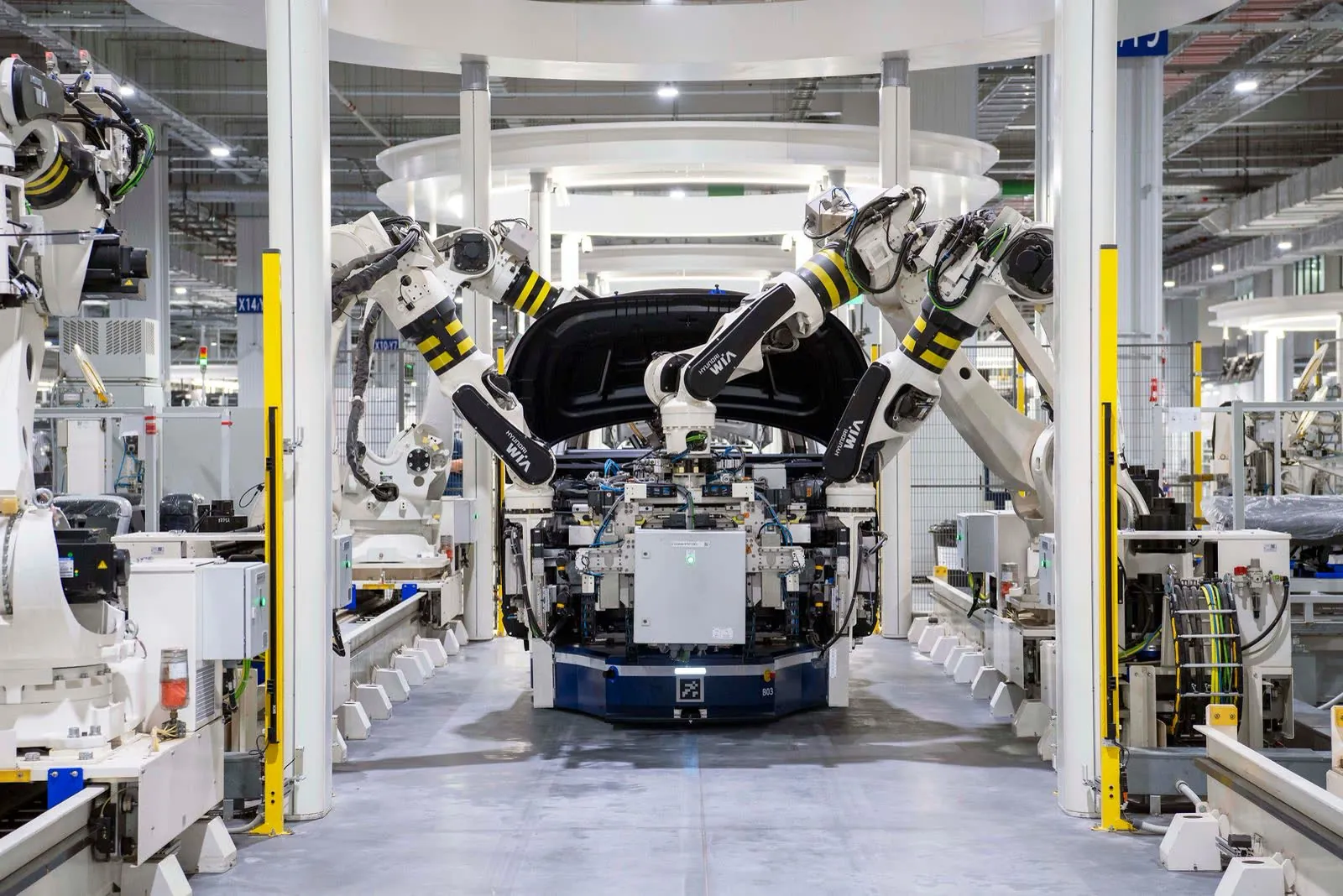
The case for it, on this axis: we built the company around the cost of the second part, because that is the number that stops high-mix shops from automating. The pitch is not that our arms are better. We use the same arms everyone else does. It is that the work of teaching a cell a new part is the thing we are trying to drive toward zero, and it is the thing a traditional fixed-scope integration contract has no incentive to touch, because that contract was signed and closed when the first part ran.
Where the others beat us: we are a young company, founded recently and backed through Y Combinator's Summer 2025 batch.6 Acieta has been doing this for more than forty years and has an installed base in the thousands.3 If your buying criterion is "will this vendor be here in 2040 with spare parts", that is a real and reasonable reason to pick someone else, and I would rather say so here than have you find out after a bad quarter. We also do not build full custom production lines. If you need a hundred-metre assembly line engineered from nothing, call JR Automation or ATS, not us.
Who should not call us: single-part, high-volume production. If you are going to run one part ten million times, a conventional integrator will build you a faster, cheaper cell than we will, because all our advantages are in flexibility you would never use.
2. Formic
Formic delivers robotic automation to small and mid-sized American manufacturers under a robots-as-a-service model, charging a subscription rather than selling a capital asset, and reports having passed 300,000 production hours.4 It is based in Chicago and has focused heavily on packaging, palletising and machine tending for mid-market food and consumer goods producers.
Why it ranks here: the subscription model is a genuinely different answer to the same problem we are attacking, and for a lot of shops it is the better answer. If the thing blocking you is not technical but financial, that a 250,000 dollar capital request will not clear your board this year, then converting it into an operating expense solves your actual problem. It also moves uptime risk onto the vendor, which is the strongest structural incentive alignment available in this industry.
Where it beats us: risk transfer and cash flow, clearly. And a service model gets you a vendor who is contractually motivated to keep the cell running for years rather than to close out a project.
The trade-off: subscriptions are not free money. Over a long enough horizon you pay more than you would have to own the asset, and you do not own it at the end. Run the arithmetic against your own cost of capital rather than against the feeling that monthly is cheaper.
3. Acieta
Acieta describes more than forty years in automation, over 10,000 robotic systems deployed globally, more than one billion dollars in installed automation, and a team of 300-plus across the United States and Mexico.3 Its centre of gravity is machine tending, palletising and depalletising, pick and place, and case packing.
Why it ranks here: depth. Ten thousand systems means the failure modes on your application have almost certainly been seen before, and a service network in the United States and Mexico means someone can physically reach your floor. For machine tending specifically, which is the single most common first robot application in American job shops, this is a very hard combination to argue against.
Where it beats us: installed base, service depth and the confidence that comes with four decades of continuity. On the durability criterion Acieta is the strongest entry on this list.
The trade-off: the traditional integration model prices and scopes per project. That works well when your application is stable and works less well when your mix is changing every quarter, because each significant change reopens a commercial conversation.
4. JR Automation
Founded in 1980 and now a Hitachi group company, JR Automation is a global integrator of custom automated systems for manufacturing and distribution.5 It operates at the scale of full production lines and multi-cell programs.
Why it ranks here: engineering capacity. If your project genuinely requires dozens of engineers and a custom line designed from first principles, this is the tier that does that work, and the backing of a large parent company matters for programs measured in years.
Where it beats us: sheer scale of engineering resource, and the ability to take on a program neither we nor Formic would quote.
The trade-off, on this list's axis: the custom-line model is optimised for exactly the case that high-mix is not. Long engineering cycles are a feature when you are amortising over millions of parts and a liability when you are amortising over four hundred. This is not a criticism of the company. It is a statement about fit, which is the only thing this list is ranking.
5. ATS Corporation
ATS Corporation is a publicly traded global automation company, listed on the TSX and NYSE, serving life sciences, food and beverage, transportation, energy and consumer products.7 Its life sciences practice is the strongest part of the business and it does end-to-end work from process design through qualification and installation.
Why it ranks here: if your production is regulated, ATS is on a different tier from everyone else on this list. Validation and qualification work is a specialist discipline and most integrators, us included, are not built for it.
Where it beats us: regulated and validated production, by a wide margin. If you need IQ, OQ and PQ documentation as a deliverable, start here.
The trade-off: the same one as JR Automation, plus a public company's project-size floor. A single cell for a fifteen-person job shop is not the work this organisation is shaped to do.
The honest summary
If your mix changes constantly and the thing killing you is the cost of reteaching a cell, talk to us. If your blocker is capital rather than capability, talk to Formic. If you want a proven machine-tending cell from a company with a forty-year service record, talk to Acieta. If you are engineering a full line, talk to JR Automation. If you are regulated, talk to ATS.
Talk to at least two. Any vendor confident in their fit will tell you to.
The five questions that actually predict whether a project succeeds
These matter more than which company you pick.
- Who owns part presentation? The single most common cause of a stalled cell is that the robot works and the parts do not arrive in front of it in a repeatable way. Get this in the scope in writing.
- What happens when part number 41 arrives? Ask for the process, the person, the elapsed time and the price. A vendor who has not thought about this is quoting you a cell for the part mix you have today.
- What are the written acceptance criteria? Cycle time and first-pass yield, with numbers, agreed before the purchase order. Not "the cell shall function".
- What is the total installed cost? Not the robot. Tooling, fixtures, guarding, safety assessment, controls integration, commissioning, training and spares.
- Who do I call at 2am? And what is the contractual response time, in hours, in writing?
The labour picture is why this is worth getting right rather than deferring. Deloitte and The Manufacturing Institute project that United States manufacturing may need to fill as many as 3.8 million jobs between 2024 and 2033, and that around 1.9 million of them could go unfilled if the skills gap persists.8 The cell you scope this year is a hedge against a hiring problem that is not going to resolve itself.
Sources
- International Federation of Robotics, World Robotics 2025. United States robot density of 307 units per 10,000 manufacturing employees, ranked eighth worldwide. Robot density surges in Europe, Asia and the Americas.
- Association for Advancing Automation (A3), Q2 2026 North American robot order statistics, as reported by The Robot Report. 8,940 units, 622 million dollars, up 4.3 percent in units and 21.3 percent in value year over year, non-automotive 56 percent of units.
- Acieta, company claims on years in business, systems deployed, installed value and headcount. About Acieta. Figures are the company's own and are not independently audited.
- Formic, robots-as-a-service model and production hours claim. formic.co and Robots as a Service (RaaS). Figures are the company's own.
- JR Automation, founding year, Hitachi group ownership and scope of work. A3 member profile and JR Automation robotics integration.
- Relling, company profile and batch. Y Combinator company directory.
- ATS Corporation, description as a global automation and technology company, public listing and served markets. atsautomation.com.
- Deloitte and The Manufacturing Institute, 2024 manufacturing talent study. Up to 3.8 million jobs to fill between 2024 and 2033, of which roughly 1.9 million could go unfilled. Deloitte press release.
Company descriptions are drawn from each company's own public statements and are attributed as such. Nothing here is an independent audit of any vendor's performance, including ours. Figures were checked on 2 September 2026. If a number has changed or a claim is wrong, write to us and it will be corrected on the page with a note.
Read next
Find out if your mix is worth automating.Bring Relling to your shop floor.
We started Relling to help American manufacturers make more of what this country needs. We'll scope projects to your needs and quote you so that your ROI typically closes within 24 months.
