The factory floor is forty years behind the office. That is the opportunity.
Every other part of the economy got the 21st century. Spreadsheets, then the internet, then cloud software, then models that write and reason. The floor got a barcode scanner and a screen bolted to a machine built in 1994. Here is why that happened, why it stopped being inevitable, and what to do about the question everybody asks next, which is whether any of this should be allowed to run things.
On this page
Two economies, one country
Walk from the front office of an American manufacturer to its floor and you cross about forty years. The office runs on the same software stack as a bank. The floor runs on a machine that was a good buy in the nineties, a traveller on a clipboard, an operator who knows which fixture is slightly bent, and a controls cabinet nobody wants to open.
That is not a caricature of a bad plant. It is a fair description of a good one. The people who run those floors are among the most capable operators in the country, and they have been making it work with tools that stopped improving a long time ago.
The numbers say the same thing. United States labour productivity grew 2.1 percent a year on average from 1947 to 2018. From 2010 to 2018 it grew 0.8 percent.1 That slowdown was not spread evenly. Durable-goods manufacturing accounted for nearly half of it, and computer and electronic products alone accounted for roughly a third of the entire private-sector deceleration.1 The part of the economy that makes physical things is the part where productivity growth stalled hardest.
Meanwhile the software economy did not stall, and the newest wave has not reached the floor either. The Census Bureau's Business Trends and Outlook Survey found 17 to 20 percent of American businesses using AI between December 2025 and May 2026, led by information and finance firms, and heavily skewed to size: 37 percent of firms with 250 or more employees, against under 20 percent for firms with fewer than 20.2 Most American manufacturers are in that second group.
Why the floor was left behind
It is tempting to read this as an adoption problem, as if manufacturers just needed to be told about the future. That reading is wrong and it leads to bad products. The floor is behind for four structural reasons, and each is legitimate.
- Consequences are physical. A bug in a spreadsheet produces a wrong number. A bug on a floor produces scrap, a crushed fixture, or an injury. The tolerance for software that mostly works is correctly much lower.
- Capital turns over in decades. A CNC machine bought in 2004 can still be a rational asset in 2026. Office hardware is replaced every three or four years, which means office software gets a fresh substrate constantly. The floor does not.
- Every plant is different. Two shops making the same nominal part have different fixtures, different part presentation, different lighting, different people. Software that assumes a standard environment mostly fails, and the floor learned that lesson from a generation of vendors.
- The integration model does not scale. Every cell has been a custom engineering project priced and scoped on its own. That is a fine way to build an automotive line amortised across millions of parts. It is a terrible way to bring the 21st century to a shop that runs two hundred part numbers.
Add those together and you get a rational forty-year gap. Nobody was lazy. The tools genuinely did not fit.
The labour side makes this urgent rather than academic. Deloitte and The Manufacturing Institute project that US manufacturing may need to fill as many as 3.8 million jobs between 2024 and 2033, and that around 1.9 million of them could go unfilled.3 The forty-year gap was survivable while people were available to stand in it. That is ending.
What changed
Three of the four reasons above have not changed. Consequences are still physical, capital still turns over slowly, and plants are still different from one another. What changed is the cost of building a bridge across all three.
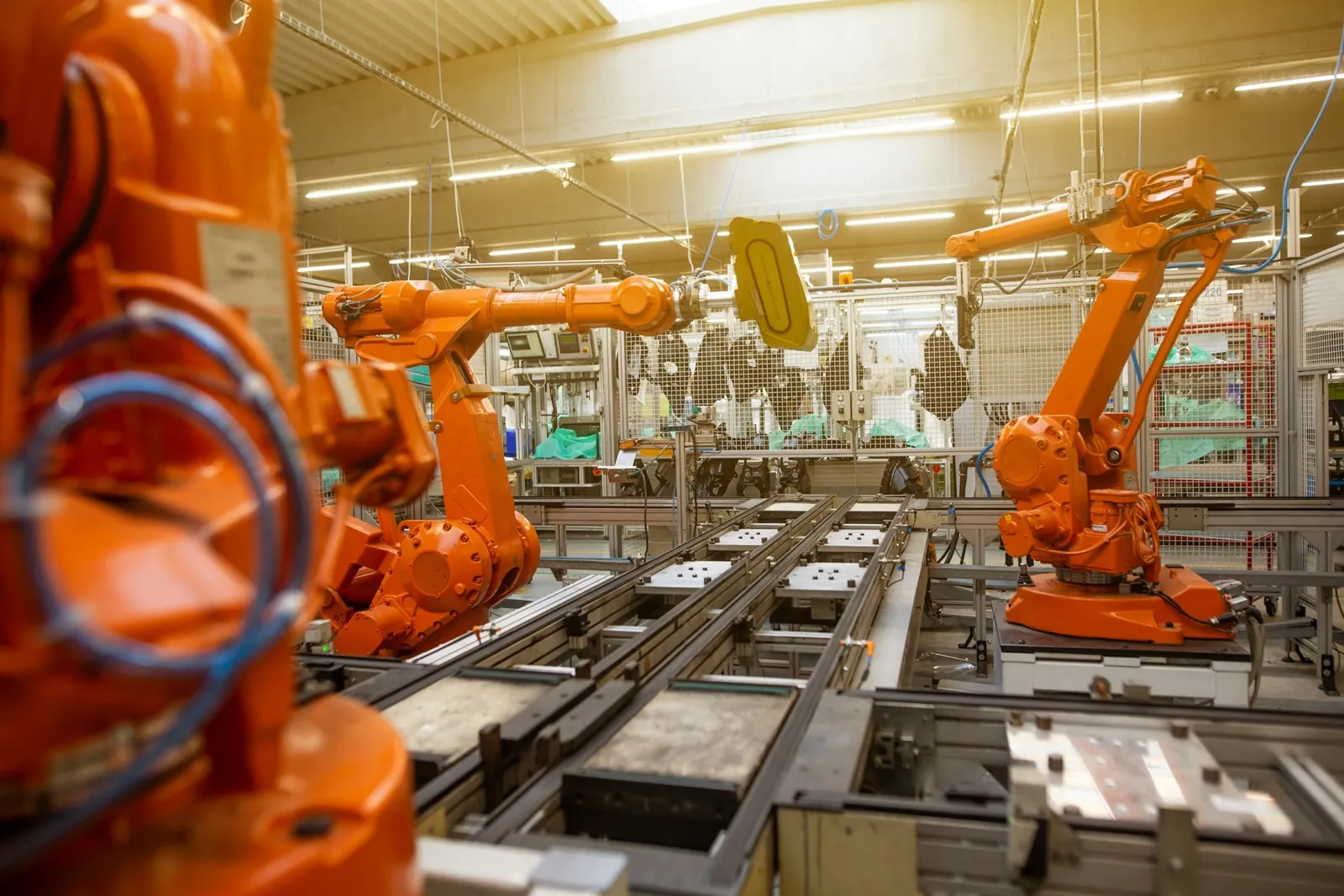
The robot arm is not the story. Arms have been commodity hardware for a decade. The story is everything around the arm. Cameras and 3D sensing that cost a fraction of what they did. Enough compute to run perception on the floor rather than in a lab. Models that can find a part in a bin, or tell a good weld from a bad one, without months of hand-tuning by a specialist. And, most importantly for a high-mix shop, a falling cost of teaching a cell a new part number, which is the single line item that kept flexible automation uneconomic for so long.
Physical AI, the general term for learned systems that perceive and act in the world, is the backdrop to all of this. It is real and it is early. I am going to say relatively little about it here because most of what gets written about it is either a demo or a forecast, and neither helps a plant manager decide anything this quarter.
What I will say is what we have found ourselves. When we scoped our first deployment, the hard problem was not dexterity. It was time. The robot needed to wait for water to boil before pouring it, and no model we tried could understand that the water was not ready yet, or wait before a simple pick and place. That led to a piece of internal research on what we called duration blindness in current robot foundation models, and to a structural argument for why it happens.4 The conclusion for a practitioner is straightforward. Learned perception is ready for the floor. Learned control of anything that matters is not, and a system that pretends otherwise should be treated as a demo.
The bridge is not a smarter robot. It is a cheaper way to make an ordinary robot useful on a floor that was never designed for one.
Should it be allowed to run things
This is the question every conversation arrives at, and the instinctive answer on most floors is "don't let it run". I understand the instinct and I think it is the wrong frame.
It is the wrong frame because it is already false. On a great many floors an automated system already makes decisions. A vision system decides pass or fail and the part goes to a reject bin without a human looking at it. A planner chooses a robot path. A controller decides when a cycle can start. Nobody calls those AI, but they are software making consequential decisions in the physical world, and they have been for years. The line was never "human or machine". It was always "which decisions, bounded how".
So the useful version of the question has three parts.
- Which decisions. Some are measurable and reversible: is this part in tolerance, where is the part in the bin, which of these four programs matches this part number. Some are neither: whether to run a marginal batch, what to do when a fixture is damaged, whether the noise the machine just made is a problem. Automate the first kind. Keep people on the second kind.
- Bounded how. A learned system that locates a part can be wrapped in deterministic limits: the arm cannot move faster than this, cannot leave this envelope, cannot proceed unless a conventional sensor agrees. This is not a compromise. It is how the safety standards already think. The 2025 revision of ISO 10218 does not ask whether a cell uses AI. It asks for a risk assessment of the application, which is exactly the right question, and my colleague Jai has written up what that revision actually changed.
- What moves the line. Evidence. Instrument everything the cell does, keep the data, and expand what the system is allowed to decide only when the record justifies it. The failure mode on both sides is deciding the boundary once and never revisiting it, either because AI is scary or because it is exciting.
Put that way, "should it run things" stops being a philosophical question and becomes an engineering one, which is the kind a plant is good at answering.
What this looks like for a forty-person shop
Not a lights-out factory. Nobody serious is offering one to a job shop in 2026, and anyone who is should be asked for their risk assessment.
It looks like one cell, on one job that scores well on part presentation and hiring pain, with learned perception doing the part of the work that used to need a vision specialist and conventional control doing the part that has to be verifiable. It looks like the cost of the second part number being known before the purchase order is signed, because that is the number that decides whether the cell is still useful in eighteen months. It looks like acceptance criteria written as numbers. And it looks like the floor generating data for the first time, so that the next decision about what to automate is made on a record rather than on a feeling.
That is a modest description of a large change. A floor that has never produced data, run by people who have never had a tool that fit, getting one. The forty-year gap does not close in a year. It closes one cell at a time, and the first one is the one that teaches a plant how to do the rest.
Where Relling sits in this
We sell exactly the thing described above, so discount accordingly. The specific bet we have made is that the cost of the second part is the number that matters, that learned perception is ready and learned control mostly is not, and that a cell should be bounded by conventional, verifiable control while the record of what it does accumulates. We publish our research, including the parts that found limits in the current models, because a plant deciding whether to trust something deserves to see where it breaks.
If you run a floor and you recognise the forty-year gap from the inside, that is the conversation we are most interested in having. There is a contact form, or you can book a call.
Sources
- Shawn Sprague, U.S. Bureau of Labor Statistics, The U.S. productivity slowdown: an economy-wide and industry-level analysis, Monthly Labor Review, April 2021. Labour productivity growth of 2.1 percent a year from 1947 to 2018 and 0.8 percent from 2010 to 2018; durable-goods manufacturing contributing nearly half of the slowdown; computer and electronic products roughly a third of the private-sector deceleration. Read the article.
- U.S. Census Bureau, Large firms with at least 20 employees biggest AI users, Business Trends and Outlook Survey, May 2026. 17 to 20 percent of businesses using AI between December 2025 and May 2026; 37 percent for firms with 250 or more employees; under 20 percent for firms with fewer than 20; information and finance the leading sectors. Read the story.
- Deloitte and The Manufacturing Institute, 2024 manufacturing talent study. Up to 3.8 million jobs to fill between 2024 and 2033, of which roughly 1.9 million could go unfilled. Deloitte press release.
- Relling, Duration Blindness in Robot Foundation Models. Internal research on a structural limit of current vision-language-action models. This is our own work and is cited as such. Read the paper.
The forty-year figure in the title is a characterisation, not a measurement, and is meant as the rough age of the software and equipment generation most American floors still run on. Every quantitative claim above is third-party and linked, except the internal research, which is labelled. Checked on 4 September 2026.
Read next
 Standards
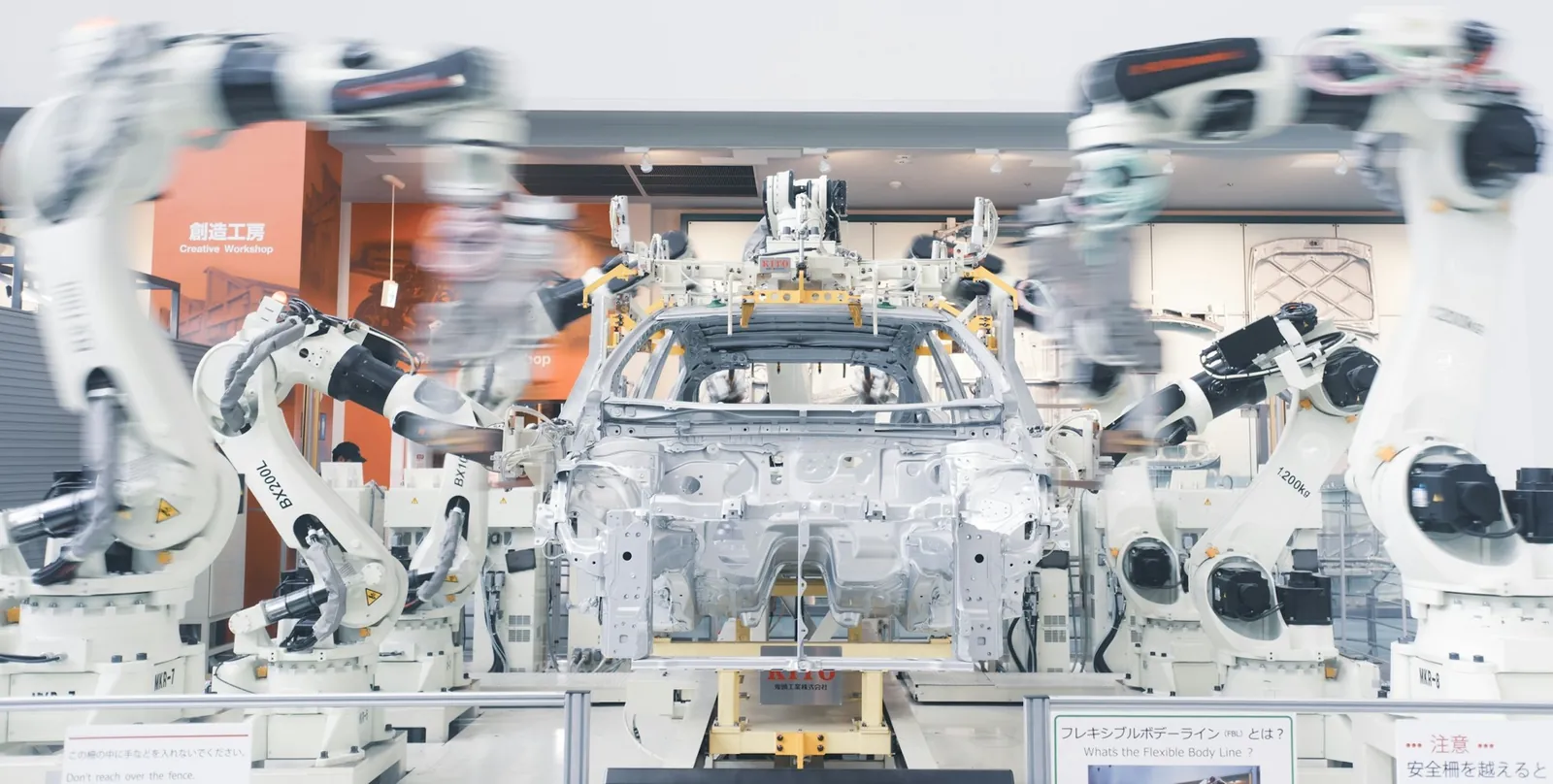
ISO 10218 and R15.06 were rewritten. What changed for your cell
The collaborative-robot spec folded in, robots classified, cybersecurity in scope, and the 2012 US standard withdrawn.
Jai Relan · 27 Aug 2026↗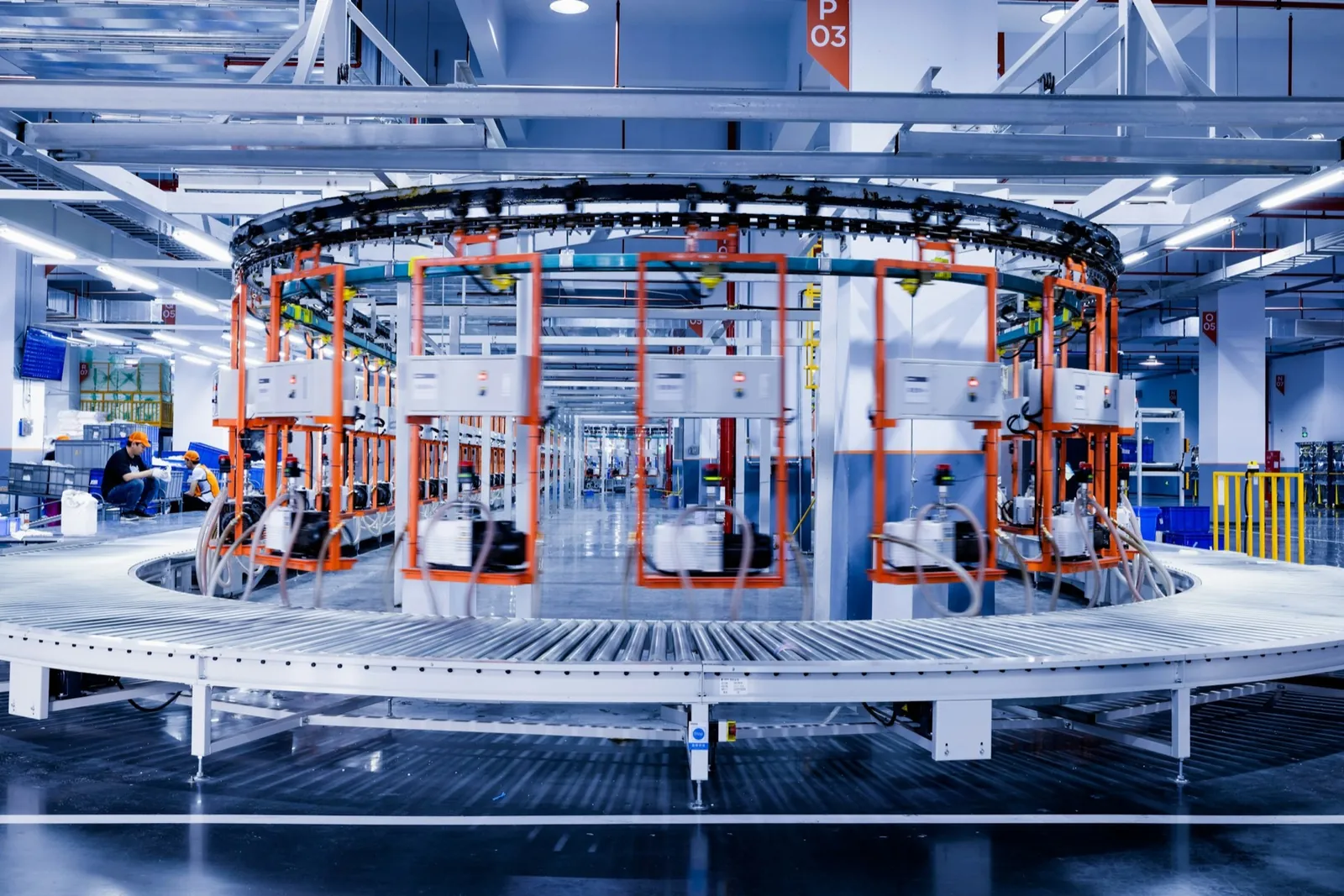 Field notes
Why most robot pilots never reach production
Pilots rarely fail on the robot. They fail on parts, ownership, and the definition of done.
Anya Singh · 6 Aug 2026↗Close the gap one cell at a time.Bring Relling to your shop floor.
We started Relling to help American manufacturers make more of what this country needs. We'll scope projects to your needs and quote you so that your ROI typically closes within 24 months.
